



Why Choose Us
Quality control
We have a complete and scientific quality management system. The process from raw materials to production and shipment has undergone strict testing to meet customer and various export requirements.
Rich experience
We are not only a traditional trading company, but also have our own factory (China Anke). Over the years, we have been committed to R&D, design, manufacture, sales of high-quality products. They are loved and praised by customers.
Excellent service
Our team is dedicated to providing exceptional customer service and ensuring that our customers are always satisfied. 'Thoughtful, comprehensive and timely service' is our eternal commitment! We can quickly respond to the market and produce Silicone Dining Mat that meet the needs of different customer groups.
Advanced equipment
There are laser cutting machines, CNC punching machines, CNC bending machines, powder coating machines, injection molding machines, ordinary punching machines and other professional production lines in the workshop. The entire production processes can guarantee customer satisfaction. Well-equipped facilities and experienced staff are committed to strictly quality control.


Definition of Stainless Steel Kitchen Utensils
It is a material without coating, and is therefore totally harmless in food contact, it does not alter the taste, appearance or smell of foods. It is a neutral material, so there is no risk of migration of toxic substances into your food!
Withstands high heat
Stainless steel kitchen utensils can withstand high temperatures, making these utensils safe to use when you’re using high heat for your recipes.
Highly durable
These kitchen utensils are very resilient; they resist cracking and chipping even after frequent use. Of course, these kitchen utensils are also impervious to rusting. Their durability also makes these kitchen utensils ideal for lifting heavy pieces of food from pans.
Non-reactive
Stainless steel kitchen tools are non-reactive, so they’re safe to use for cooking a wide range of foods, including acidic foods. These kitchen utensils also don’t impact flavor quality since it doesn’t have a non-stick coating that will come off in the food you’re cooking.
Easy to clean
Stainless steel kitchen utensils are often easy to clean. Most of these utensils can be cleaned just with soap and water, so cleaning up the kitchen when you finish cooking isn’t a complete nightmare. You may even be able to put these utensils in the dishwasher.
Attractive, efficient design
Most stainless steel kitchen utensils are aesthetically pleasing, with a shiny finish that will look great in your kitchen. These kitchen utensils are ergonomically designed too, making them easier to handle.
Types of Stainless Steel Kitchen Utensils
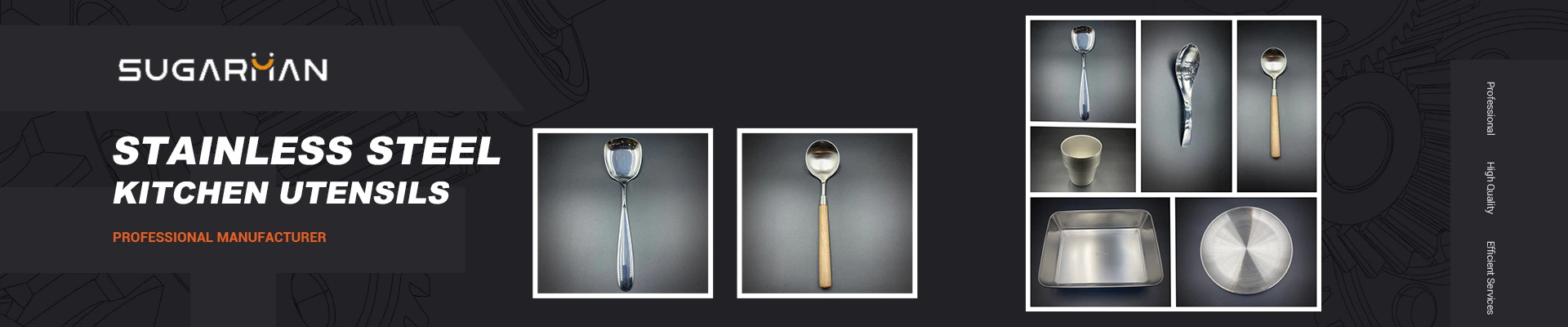
Stainless steel round food plates
Exquisite craftsmanship. Corrosion resistant, Can be used for a long time.
Stainless steel soup spoon with wooden handle
Food Grade stainless steel material. 100% Wooden natural handle texture ,Solid wood to create a good texture.
Stainless steel drinking cup
Smooth Cup Rim: Smooth Edge, comfortable to use. Polishing Inside Surface: Easy to clean.

Application of Stainless Steel Kitchen Utensils
- Household
- Restaurant
- Hotel
- School canteen
- Enterprises and institutions canteen
How to Maximize the Benefits of Stainless Steel Kitchen Utensils
Preheating
Always preheat your stainless steel cookware sets before adding ingredients to promote even heating and prevent food from sticking.
01
Cooking with oils
When using stainless steel cookware, it is advisable to use oils or fats to aid in cooking and prevent sticking.
02
Proper cleaning
Avoid using harsh abrasives or steel wool when cleaning stainless steel cookware, as they can scratch the surface. Instead, use gentle cleansers and non-abrasive sponges to maintain its shine.
03
Temperature control
Stainless steel kitchen cookware has excellent heat conductivity. Use medium to low heat settings to prevent food from scorching or burning.
04
Layering ingredients
Layer ingredients in stainless steel cookware sets based on their cooking time and heat requirements. This allows for uniform cooking and optimal flavors.
05
How To Choose Stainless Steel Kitchen Utensils

Steel Quality
Opt for high-quality stainless steel utensils to ensure durability and corrosion resistance.

Thickness
Thicker stainless steel cookware is generally more durable and distributes heat better.

Ergonomic Handle
Choose utensils with comfortable, ergonomic handles that make them easy to handle during food preparation.

Cooktop Compatibility
Make sure the utensils are suitable for the cooktop you'll be using them on, whether it's gas, electric, or induction.
Maintenance Tips for Stainless Steel Kitchen Utensils
Proper cleaning
Wash utensils by hand with warm water and mild soap. Avoid using abrasive cleaners that can damage the protective layer of the steel.
Complete drying
After washing, dry the utensils completely to avoid water stains and corrosion.
Avoid contact with salt
Avoid leaving utensils in direct contact with salt for long periods, as this can damage the stainless steel.
Proper storage
Store stainless steel cookware in a dry, well-ventilated place to prevent moisture buildup.
Raw Material Sourcing: Ensuring the Best Start
It all begins with securing top-tier raw materials. We take pride in forming strong, enduring partnerships with our suppliers, built on a shared commitment to quality and sustainability. Rigorous quality control checks ensure we're working with the best possible materials, setting the foundation for our high-standard cookware.
Pressing: Shaping the Cookware
The transformation begins with the pressing process, where our stainless steel blanks take the form of pans. The material is pulled through a series of dies with precision control, ensuring a uniform shape and the desired quality. It's a remarkable transition from a flat sheet to a product starting to resemble your favorite cookware.
Cutting & Rolling: Perfecting the Form
Following pressing, advanced machinery and precise blade positioning cut the stainless steel into shape. The edges are rolled to achieve a smooth, burr-free finish, and any waste material is responsibly recycled. This phase is crucial to ensuring the cookware's ergonomics, safety, and aesthetic appeal.
Cleaning & Drying: Ensuring Impeccable Hygiene and Aesthetics
Cleanliness is a priority in our process. Each cookware piece undergoes a thorough cleaning process that removes dust and contaminants. It's sprayed with water, immersed in a cleaning solution, rinsed again, and dried using hot air blowers. This step ensures the cookware has a smooth, clean surface, ready for the next stage.
Sand Blasting: Preparing for Surface Treatments
Once clean, the cookware is sandblasted with high-speed abrasive particles. This process removes any lingering impurities, creating a slightly textured surface that enhances the adhesion of non-stick coatings or other surface treatments.
Non-Stick Coating Application: Enhancing Usability
With the cookware pre-heated and sandblasted, it's time for the non-stick coating application. This coating, cured at high temperatures, forms a durable, long-lasting bond that enhances the cookware's usability and ease of cleaning. A meticulous quality inspection follows this step, ensuring every piece meets our stringent standards.
Laser Engraving: Implementing Precision Branding
Next, our laser machine comes into play, etching logos or designs onto the cookware with remarkable precision. This step ensures consistent branding across all our products, a visual testament to our commitment to quality and craftsmanship.
Handle Riveting: Adding Functionality
Riveting the handle is a pivotal step, literally bringing functionality to the cookware. The handle is positioned and secured with a rivet, forming a strong bond. This process ensures our cookware is comfortable to handle and a delight to use.
Packaging: Final Steps Toward Your Kitchen
The final step is packaging. Automated machines carefully wrap, label, and box the cookware for shipment. It's here that we take a moment to appreciate the journey each piece has undertaken, from a humble stainless steel blank to a culinary masterpiece ready for your kitchen.

How to Clean Stainless Steel Kitchen Utensils
Create a Cleaning Solution
Fill a sink or dishpan with hot water and add a few drops of a good dishwashing liquid, preferably one with a degreaser as one of the main ingredients.
Scrape Away Excess Food
Use a wooden spatula to scrape away excess food left on the stainless steel kitchen utensils. Dispose of the food properly.
Wash the Cookware
Submerge the stainless steel kitchen utensils in hot soapy water. Use a non-abrasive sponge to wash the inside and outside of the cookware.
Rinse and Dry
Once the stainless steel kitchen utensils is clean, rinse well with warm water. Immediately use a lint-free microfiber towel to dry the cookware thoroughly. This will help prevent water spots and streaks.
How to Remove Discoloration From Stainless Steel Kitchen Utensils
Clean With Vinegar
Saturate a clean sponge with undiluted distilled white vinegar and wipe away the rainbow-hued discoloration that can appear on stainless steel kitchen utensils. Rinse well in warm water and dry with a microfiber towel.
Remove Mineral Build-up With Vinegar
To remove chalky white mineral residue from the bottom of stainless steel kitchen utensils, fill the pan with one part distilled white vinegar and three parts water. Place on a stovetop and bring to a boil. Turn off the heat and allow the pan to cool completely before washing as usual.
Remove Water Spots With Baking Soda
Sprinkle baking soda on a damp sponge and gently scrub the water spots on the stainless steel following the grain of the metal. Rinse with warm water and dry with a microfiber towel.

Help prevent burned-on food by preheating the stainless steel kitchen utensil before adding the oil. Allow the oil to become hot before adding food.
If not using oil, allow any refrigerated foods to come to room temperature before adding them to a hot stainless steel pan.
Avoid pitting by allowing water to come to a boil before adding salt when cooking pasta.
Do not allow stainless steel pans to air dry. Dry with a lint-free cloth after rinsing to prevent water spots.
Use a non-abrasive cleaner for general cleaning, stain removal, and keeping the stainless steel kitchen utensil shiny as new. Follow the manufacturer's directions for use.
Don't use metal scouring pads or abrasive cleaners. Although they do an excellent job of removing stuck-on food, all stainless steel kitchen utensil makers caution that abrasives can scratch the surface of the cookware
Certifications
ISO9001-2015 Sugarman Trading

Our Factory
Ningbo Sugarman Trading Co., Ltd has been focusing on export business for many years, which is located in a beautiful port city of Ningbo. We mainly supply metal stamping parts, sheet metal parts, plastic product parts and various silicone kitchen products, stainless steel products for kitchen to our customers. Over the years, we have been committed to R&D, design, manufacture, sales of high-quality products, which are exported to the United States, Japan, Germany, Sweden, the United Kingdom and other countries.


FAQ
Q: Is stainless steel good for kitchen utensils?
Q: Is it safe to cook in stainless steel utensils?
Q: Which steel is best for utensils?
Q: What type of stainless steel is food safe?
Q: Do stainless steel utensils rust?
Q: What should I look for when buying stainless steel cutlery?
Q: What is the healthiest stainless steel to cook with?
Q: Is stainless steel safe to drink from?
Q: What grade of stainless steel is best?
Q: What is the safest steel for cooking?
Q: Can stainless steel be unhealthy?
Q: Why drink out of stainless steel?
Q: What is the cheapest grade of stainless steel?
Q: Can you cook chicken on stainless steel?
Q: What is the trick to cooking with stainless steel?
Q: Why shouldn't you paint stainless steel?
Q: Why is all my stainless steel rusting?
Q: Can you wear stainless steel everyday?
Q: Do chefs use stainless steel?
Q: Can you use butter on stainless steel?
We're known as one of the most professional stainless steel kitchen utensils manufacturers in China. Please rest assured to buy customized stainless steel kitchen utensils at competitive price from our factory. For more information, contact us now.